Top 10 Payment Gateway in Malaysia (2026 Guide for eCommerce Sellers)

payment gateway

Choosing the right payment gateway in Malaysia can make or break your eCommerce business. From abandoned carts due to limited payment options to delayed settlements that affect cash flow, payment processing plays a crucial role in customer experience and operational efficiency.

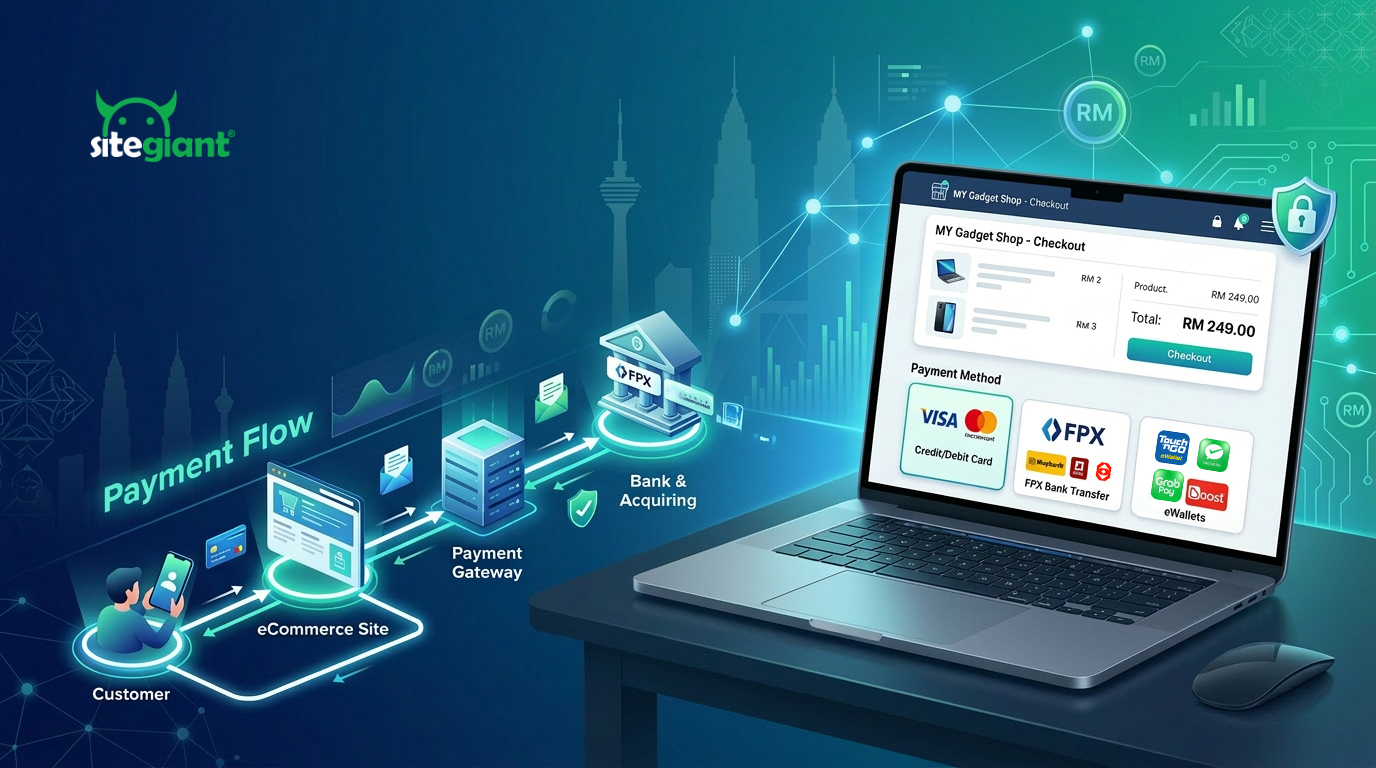
A payment gateway acts as the bridge between your website, customers, and banks — securely processing online transactions in real time. In a market like Malaysia, where consumers use credit cards, FPX online banking, and eWallets such as GrabPay and Touch ‘n Go, having a reliable and multi-channel payment solution is essential.

Many eCommerce sellers face challenges such as:
  • Lower checkout conversion rates due to limited payment options
  • Slow settlement cycles that delay cashflow
  • High or unclear merchant discount rates affecting profit margins
  • Failed or rejected transactions during peak campaigns
  • Manual verification of bank transfers that slows order fulfillment
  • Difficulty reconciling marketplace payouts with actual bank deposits
  • Security risks that damage customer trust

As your sales volume grows, these challenges can impact revenue performance, strain operational efficiency, and limit your ability to scale efficiently across multiple sales channels. In this guide, we will compare the top 10 payment gateways for 2026, analyzing their fees and features, so you can build a checkout experience that converts and an operation that scales.

What is Payment Gateway?

using smartphone and credit card online shopping

A payment gateway is a digital service that processes credit card payments, online banking (FPX), and e-wallet transactions for eCommerce stores. Think of it as the digital equivalent of a credit card terminal in a physical shop.

When a customer clicks “Pay Now” on your website, the gateway securely authorizes the transaction, encrypts the sensitive data, and transfers the funds from the customer’s bank to your merchant account. For Malaysian businesses, a robust gateway must support local favorites like FPX online banking, Touch ‘n Go eWallet, and increasingly, Buy Now Pay Later (BNPL) options. It is the bridge that ensures secure payment processing happens instantly, allowing you to focus on shipping orders rather than chasing bank transfers.

5 Benefits of Using a Payment Gateway
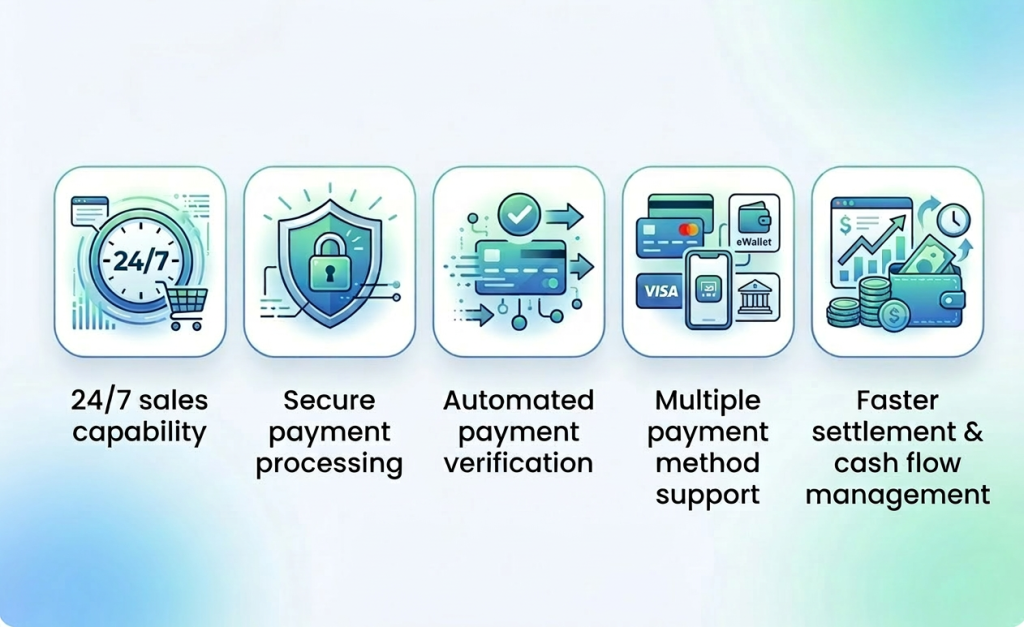
1. 24/7 Sales Capability

A payment gateway allows your eCommerce store to accept payments anytime, anywhere. Unlike manual bank transfers that require verification during business hours, an online payment gateway in Malaysia processes transactions instantly, even outside office hours. This means customers can complete their purchases at midnight, during weekends, or during peak campaigns without delays. Continuous payment acceptance ensures you never miss out on potential sales opportunities.

2. Secure Payment Processing

Security is one of the most critical advantages of using a professional payment gateway. It protects sensitive customer data through encryption, secure authentication, and PCI-DSS compliance. With built-in fraud detection systems and secure transaction authorization, a reliable payment gateway helps reduce the risk of chargebacks, fraudulent transactions, and data breaches. This strengthens customer trust and protects your brand reputation.

3. Automated Payment Verification

Manual bank transfer verification slows down order processing and increases the risk of human error. A payment gateway automates payment verification by instantly confirming successful transactions. Once payment is approved, the order can move directly into fulfillment. This improves operational efficiency, speeds up shipping, and enhances the overall customer experience.

4. Multiple Payment Method Support

Malaysian consumers use a variety of payment methods, including FPX online banking, credit and debit cards, eWallets like Touch ‘n Go, and Buy Now Pay Later options. A professional payment gateway supports multiple payment methods within a single checkout flow. Offering flexible payment options improves checkout convenience and increases conversion rates by reducing cart abandonment.

5. Faster Settlement & Cash Flow Management

A structured settlement cycle allows businesses to predict when funds will be transferred to their merchant account. Faster settlement improves cash flow visibility and helps with inventory planning, marketing budgets, and operational expenses. By using a reliable payment gateway in Malaysia, sellers gain better control over payout schedules, transaction fees, and merchant discount rates, enabling smarter financial management.

Top 10 Payment Gateways in Malaysia

1. Adaptis

Adaptis is a Malaysia-based payment gateway provider offering secure online payment processing for SMEs and growing businesses. It supports credit and debit cards, FPX online banking, and eWallet payments. Adaptis focuses on providing competitive merchant discount rates and reliable local support. While suitable for businesses targeting Malaysian customers, integration flexibility may vary depending on your ecommerce ERP or multichannel setup.

2. Stripe Malaysia

Stripe is a globally recognized payment platform known for its developer-friendly APIs and strong international payment capabilities. It supports credit cards, digital wallets, recurring billing, and subscription models. Stripe is ideal for businesses with cross-border ambitions or SaaS models. However, local marketplace reconciliation and multichannel ERP integration may require additional configuration.

3. Billplz

Billplz is popular among Malaysian SMEs for its simple onboarding process and affordable pricing structure. It supports FPX payments and recurring billing, making it suitable for subscription-based businesses. Billplz is easy to set up, but businesses with complex multichannel operations may need additional tools for payment reconciliation and reporting automation.

4. SenangPay

SenangPay is known for its SME-friendly pricing and straightforward setup process. It supports FPX, credit cards, and eWallet payments, helping small online stores get started quickly. While it is cost-effective for early-stage sellers, advanced reporting and ERP-level automation features may be limited for larger operations.

5. PayPal

PayPal is a globally trusted payment provider that enables businesses to accept international payments easily. It is widely recognized by customers, which can improve trust and checkout conversion rates. However, transaction fees can be higher compared to local providers, and settlement structures may not always align with Malaysian marketplace workflows.
Fiuu Logo

6. Fiuu (formerly Razer Merchant Services)

Fiuu, previously known as Razer Merchant Services, offers a comprehensive payment solution covering cards, FPX, eWallets, and Buy Now Pay Later options. It has strong regional coverage in Southeast Asia and supports both online and offline payments. It is suitable for businesses looking for omnichannel payment capabilities, though backend reconciliation may still require ERP integration for full operational visibility.

7. Atome

Atome specializes in Buy Now Pay Later services, allowing customers to split payments into installments. It is particularly effective for increasing average order value and improving checkout conversions. However, Atome focuses mainly on BNPL rather than acting as a full standalone payment gateway, so businesses may need to combine it with other providers.

8. Commerce Pay

Commerce Pay provides secure online payment processing with support for credit cards, FPX, and local banking methods. It caters to Malaysian SMEs looking for stable payment acceptance. While it offers essential payment features, advanced multichannel automation and centralized reporting depend on external system integration.

9. Curlec by Razorpay

Curlec, now part of Razorpay, focuses on recurring payments and subscription billing solutions. It supports automated direct debit and payment collection, making it suitable for businesses with membership or installment-based models. However, it is more specialized in recurring payments rather than full eCommerce multichannel transaction management.

10. ToyyibPay

ToyyibPay is a Malaysia-based payment gateway known for its affordability and FPX-focused payment solutions. It is commonly used by small businesses, event organizers, and educational institutions. While cost-effective, it may offer fewer advanced integration and automation features compared to larger providers.

Overall Comparison of Payment Gateways in Malaysia

Payment GatewayBest ForSupported Payment MethodsStandard Settlement Period
AdaptisSMEs & RetailCredit/Debit Cards, FPX, Major eWallets (Touch ‘n Go, GrabPay, Boost), BNPLT+2 to T+5 (Depending on the specific payment channel used)
StripeTech & GlobalCredit/Debit Cards (Visa, Mastercard, Amex), FPX, GrabPay, Apple Pay, Google Pay.T+3 (Business days)
BillplzBudget / FPXFPX Online Banking (Core), eWallets, and Credit Cards (via integrations).T+1 (Next business day for FPX)
SenangPaySocial SellersCredit/Debit Cards, FPX Online Banking, Major eWallets.T+2 (FPX/eWallets) to T+3 (Cards)
PayPalInternational TrustPayPal Wallet, International Credit/Debit Cards.Instant to PayPal balance (Bank withdrawal takes 2-3 business days)
FiuuO2O (Online-to-Offline) / RetailCredit Cards, FPX, eWallets, and Offline Cash at 7-Eleven (Razer Cash).T+3 to T+5 (Depending on merchant tier)
AtomeHigh TicketBuy Now Pay Later (BNPL) – splitting payments into 3 monthly installments.T+3 (Business days)
Commerce PayReliabilityCredit/Debit Cards, FPX Online Banking.T+2 to T+3 (Standard bank processing)
CurlecSubscriptionsDirect Debit (Auto-billing), FPX, Credit Cards.T+1 to T+2 (Depending on direct debit mandates)
ToyyibPayMicro-SMEsFPX Online Banking, Credit Cards.T+1 (Next business day for FPX)
💡 Pro-Tip: Understanding "T+X" Settlement
"T" is the day the transaction happens, and "X" is the number of business days (excluding weekends and public holidays) it takes for the money to reach your bank.

For Example (T+2 Settlement): If a customer pays on a Friday (T), the weekend is skipped. The bank processes it on Monday (T+1), and the money safely arrives in your account on Tuesday (T+2).

From the comparison above, it’s clear that each payment gateway serves a different purpose. However, while these gateways excel at processing payments, they typically focus only on transaction handling.

For eCommerce sellers managing multiple marketplaces like Shopee, Lazada, TikTok Shop, and Webstore, payment processing is only one part of the workflow. Businesses also need to handle payment reconciliation, inventory synchronization, and centralized reporting, which is where ERP-integrated solutions like SiteGiant come into play.

How to Choose the Right Payment Gateway for Your eCommerce Store?
Selecting the right payment gateway in Malaysia goes beyond simply accepting online payments. The gateway you choose directly affects your checkout conversion rate, operational efficiency, and overall profitability. Here are 6 key factors every eCommerce seller should consider before making a decision.

1. Fees and Overall Cost

Different payment gateways charge different pricing structures, usually in the form of a Merchant Discount Rate (MDR) per transaction. This fee typically ranges between 1.8% to 3.5% depending on the payment method and sales volume.

However, MDR is not the only cost to consider. Some providers may also charge setup fees, monthly maintenance fees, refund processing charges, or cross-border transaction costs. Understanding the full pricing structure helps you avoid hidden expenses and maintain healthy profit margins.

2. Settlement Period

The settlement period refers to how long it takes for the collected payment to reach your merchant account. Some gateways offer faster settlements such as T+1 (next business day), while others may take several days.
 
For businesses with high transaction volumes or fast inventory turnover, faster settlements can improve cash flow management. A predictable payout schedule also makes it easier to manage restocking, marketing expenses, and daily operations.

3. Customer Payment Preference

Understanding your customers’ preferred payment methods is essential for improving checkout conversion rates. In Malaysia, consumers commonly use FPX online banking, credit and debit cards, eWallets like Touch ‘n Go, and increasingly Buy Now Pay Later options.
 
Choosing a gateway that supports multiple payment methods ensures customers can pay using their preferred option, reducing friction at checkout and lowering cart abandonment rates.

4. Integration Compatibility

A good payment gateway should integrate smoothly with your existing eCommerce ecosystem, including your webstore platform, marketplaces, and ERP systems.
 
For sellers managing multiple channels such as Shopee, Lazada, TikTok Shop, and their own webstore, integration compatibility becomes even more important. Seamless integration helps automate payment reconciliation, synchronize orders, and centralize financial reporting.

5. Security and Reliability

Security should always be a top priority when handling online payments. A professional payment gateway should comply with PCI-DSS standards, use encryption technology, and provide fraud detection mechanisms to protect sensitive customer data.
 
Reliable system performance is equally important. During peak campaigns such as 11.11, 12.12, or festive sales periods, the payment gateway must be able to handle high transaction volumes without system downtime.

6. Customer Support and After-Sales Service

Even the best payment systems may occasionally encounter technical issues or transaction disputes. When this happens, responsive customer support becomes critical.
 
Choose a payment gateway provider that offers reliable technical assistance, clear documentation, and responsive support channels. Good after-sales service ensures problems are resolved quickly, minimizing disruptions to your business operations.

Frequently Asked Questions (FAQ)

The best payment gateway depends on your business needs. Popular options include SenangPay, Billplz, iPay88, Stripe, and PayPal. For multichannel eCommerce sellers, it’s important to choose one that supports ERP integration.
A merchant account is a bank account specifically for businesses to accept credit/debit cards. A payment gateway is the technology that connects your website to that merchant account. Modern “aggregators” like Stripe or SenangPay combine both, so you don’t need to open a separate merchant account at a bank.
Yes! With SiteGiant, you can offer multiple options. For example, you can use PayPal for international customers and ADAPTIS for local Malaysian banking, ensuring you get the best rates for both.
Most payment gateways charge a Merchant Discount Rate (MDR) between 1.8% to 3.5%, plus possible transaction or setup fees. Always check the full fee structure before signing up.
 Yes. FPX online banking and eWallet payments are widely used in Malaysia. Supporting these methods helps improve checkout conversion rates.

Beyond Payments: Scaling Your eCommerce Operations with SiteGiant
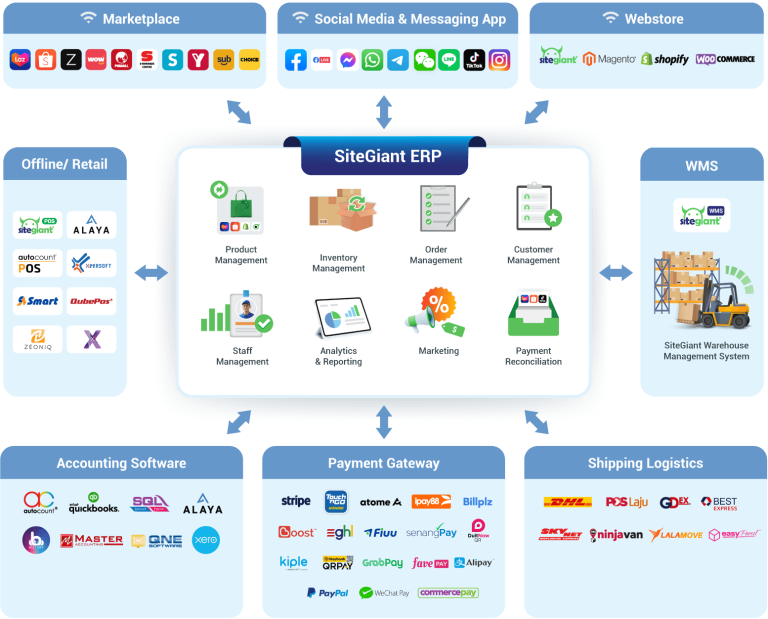
A reliable payment gateway is a critical foundation for any eCommerce business. It ensures customers can complete purchases smoothly while giving sellers the confidence that transactions are processed securely and efficiently.
 
However, as your eCommerce business grows, managing payments alone is no longer sufficient. Sellers operating across platforms like Shopee, Lazada, TikTok Shop, and their own webstore must also manage order processing, inventory updates, and financial reconciliation across multiple channels. Without a centralized system, these tasks can quickly become complex, time-consuming, and difficult to manage.
 
This is where SiteGiant helps bridge the gap between payment processing and operational efficiency. By integrating payment data with order management, real-time inventory synchronization, and centralized reporting, SiteGiant allows you to manage your entire eCommerce workflow from one platform. The result is better visibility, reduced manual work, and a stronger foundation for scaling your business with confidence.