- Overselling due to errors in spreadsheets or manual stock tracking
- Overstocking caused by poor demand forecasting and inaccurate data
- Wasting time manually updating inventory across different seller centres
- Losing sales from stockouts during peak sales campaigns
- Difficulty keeping track of stock across warehouses, retail stores, and online channels
- Lack of real-time insights into which products are moving fast and which are stuck in storage
- Making purchasing decisions based on guesswork instead of accurate data
What is Inventory Management?

Inventory management is the process of tracking, organizing, and controlling the stock in your business — whether you sell online, in physical stores, or both. It ensures that you always have the right products, in the right quantity, at the right time.
Unlike manual methods such as spreadsheets or logbooks, a modern inventory management system like SiteGiant Inventory Management automates the entire process. It syncs your stock in real time across multiple sales channels, reduces human errors, and gives you accurate insights for better decision-making.
Benefits of Effective Inventory Management:
Prevent overselling: Automatically sync stock across all your sales channels.
Avoid overstocking: Use data-driven insights to forecast demand accurately.
Save time: Eliminate the need to manually update stock in multiple seller centres.
Never miss sales: Get reminders and tools to restock in time for campaigns.
Centralized control: Manage inventory across warehouses, retail outlets, and online platforms from one system.
Better decisions: Access real-time reports on fast-moving vs. slow-moving products.
Scalability: Grow your business confidently without worrying about inventory chaos.
Top 10 Inventory Management Systems in Malaysia
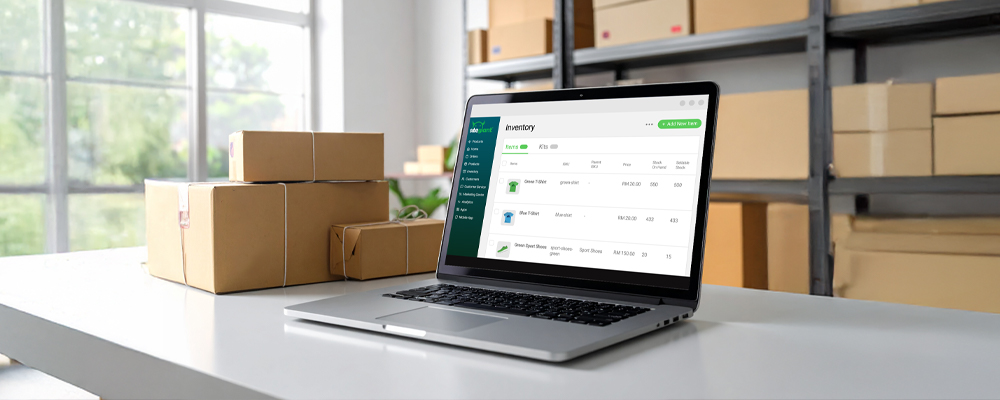
1. SiteGiant

2. inFlow Inventory

3. Katana MRP

4. Cin7
5. Unleashed Software

6. Extensiv

7. NetSuite

8. Odoo

9. Fishbowl Inventory

10. Zoho Inventory
Simple and affordable with integrations across the Zoho ecosystem, making it suitable for small sellers. However, it has limited advanced features for scaling and does not directly support Malaysian marketplaces.
Overall Comparison of Inventory Management Systems in Malaysia
| System | Strengths | Limitations |
| SiteGiant | Built for Malaysian SMEs, real-time multichannel sync, bundle products, bulk linking, dead stock & low stock tools | Focused on Malaysia & SEA (not suitable for global scaling) |
| inFlow | Easy to use, barcode scanning, reorder points, multi-location support | No direct Shopee/Lazada/TikTok integration, less practical for local sellers |
| Katana MRP | Strong for manufacturing workflows, batch tracking, demand planning | Not retail-focused, no local marketplace integration |
| Cin7 | Advanced forecasting, centralized inventory, warehouse tools | Complex setup, costly, lacks Malaysian marketplace support |
| Unleashed | Good stock control, real-time reporting, multi-warehouse support | Requires 3rd-party connectors for e-commerce, adds complexity |
| Extensiv | Strong 3PL and global warehouse integration | Not tailored for Malaysia, complex for SMEs |
| NetSuite | Full ERP with powerful inventory and supply chain modules | Expensive, too complex for SMEs, minimal local e-commerce support |
| Odoo | Flexible, affordable, open-source customization | Requires technical setup, no built-in marketplace sync |
| Fishbowl Inventory | Powerful inventory and manufacturing tools with strong QuickBooks integration. | Expensive and lacks support for Malaysian marketplaces like Shopee and Lazada. |
| Zoho | Simple, affordable, integrates with Zoho ecosystem | Limited advanced features, no direct Malaysian marketplace support |
How to Choose the Best Inventory Management System

- Real-time stock sync: Prevent overselling by ensuring inventory updates instantly across Shopee, Lazada, TikTok Shop, webstores, retail outlets, and other channels.
- Multichannel integration: Connect all your online and offline sales channels so you don’t need to update each platform manually.
- Ease of use: The system should be simple enough to manage daily operations without IT skills or complicated setups.
- Multi-warehouse & retail support: Essential if you keep stock in warehouses.
- Low stock alerts & notifications: Make sure you never run out of popular products during high-demand campaigns.
- Stock adjustment tools: The system should make it easy to correct stock errors or record damages, even on the go.
- Dead stock & slow-moving reports: Identify products that aren’t selling and adjust your purchasing strategy.
- Bundle or kit support: If you sell bundles or promotional sets, the system should auto-deduct stock from each included item.
- Forecasting & reporting: Get insights into fast-moving and slow-moving items to optimize restocking and cash flow.
- Long-term value: Consider not just cost, but scalability, automation, and reliable local support to ensure your system grows with your business.
Why SiteGiant is the Best Choice for Inventory Management

SiteGiant is Malaysia’s leading e-commerce solution, purpose-built to solve the real inventory challenges faced by SMEs. Unlike generic systems, SiteGiant combines multichannel integration, local relevance, and scalable features that grow with your business. Sellers can focus on sales while SiteGiant handles the complex work of syncing and managing stock.
Key Features & Benefits:
Multichannel Integration – Sync stock seamlessly across Shopee, Lazada, TikTok, webstores, retail and many others in real time.
Multi-Warehouse Support – Manage stock from multiple warehouses in one system.
Bulk Inventory Linking – Connect one SKU across different sales channels to prevent mismatched stock counts.
Dead Stock Report – Identify products that are not moving and free up cash flow.
Low Stock Alerts – Get instant notifications before products run out.
Stock Adjustment Tools – Easily perform stock adjustments with a smartphone.
Bundle & Kit Products – Auto-deduct the inventory of each item in a bundle product or free gift.
Data-Driven Decisions – Stop guessing. Use real sales and stock data to know what to buy and when.
With SiteGiant, SMEs in Malaysia gain a practical, future-proof system that reduces manual work, improves accuracy, and supports long-term growth.
FAQ About Inventory Management in Malaysia
How much does inventory management software cost in Malaysia?
What is the best inventory management system for SMEs in Malaysia?
Can I use free inventory management tools?
Is it cheaper to manage stock manually?
How long does it take to set up inventory management software?
Conclusion