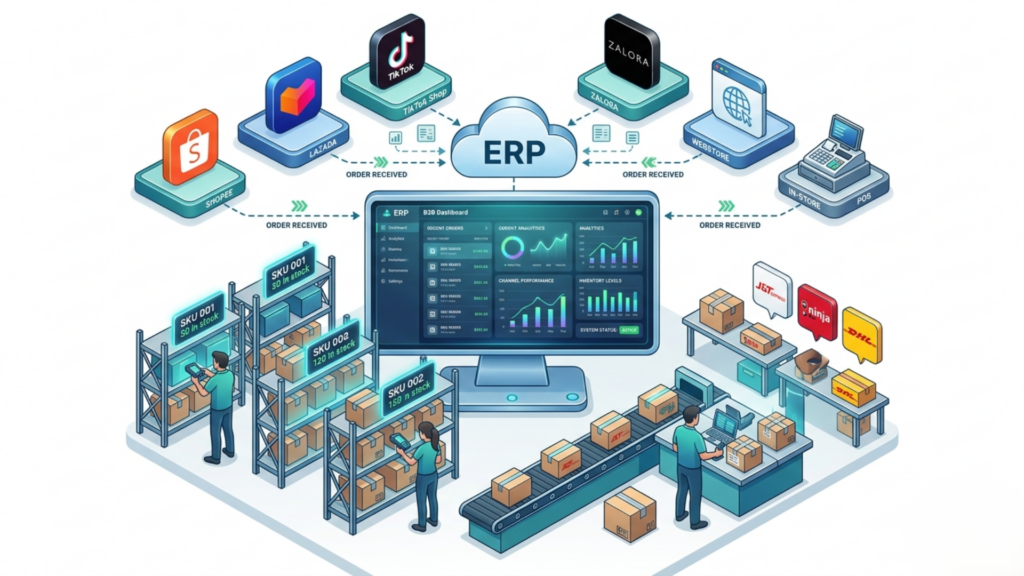
As ecommerce businesses expand across Shopee, Lazada, TikTok Shop, Zalora, webstores, and retail stores, order management becomes increasingly complex. Managing orders across multiple sales channels often requires significant coordination between inventory management, fulfillment teams, shipping operations, and customer service activities.
Many ecommerce sellers still rely on manual workflows to process orders across different platforms. Staff may need to check orders manually, process orders platform by platform, download order information separately, generate shipping documents manually, and coordinate fulfillment activities across multiple systems.
While these processes may be manageable during the early stages of business, they often become major operational bottlenecks as order volume increases. During major ecommerce campaigns such as Double Digit Sales, Payday Campaigns, and Mega Sales, order volume can rise significantly within a short period of time, placing additional pressure on operational teams and fulfillment workflows.
Without a centralized order management system, businesses often face:
- Delayed order processing
- Fulfillment bottlenecks
- Repetitive manual work
- Human errors
- Slower shipping preparation
- Poor operational visibility
To improve operational efficiency, many ecommerce businesses are adopting ecommerce ERP systems to centralize order management and automate repetitive workflows. Instead of managing orders separately across multiple platforms, sellers can coordinate multichannel order processing through one centralized system.
By improving order visibility, reducing manual coordination, and streamlining operational workflows, ERP systems help businesses process orders more efficiently while supporting higher order volumes across multiple sales channels.
In this article, we will explain why manual order processing becomes slow, how manual workflows create operational bottlenecks, and how ecommerce ERP systems help businesses reduce order processing time and improve operational efficiency.
Why Manual Order Processing Becomes Slow?

Order processing is one of the most important operational workflows in ecommerce businesses. Before an order can be successfully shipped to customers, several backend processes need to be completed accurately and efficiently.
These processes typically include order synchronization, inventory verification, payment verification, picking preparation, packing coordination, shipping arrangement, and tracking updates.
While these tasks may appear straightforward, managing them manually becomes increasingly difficult as businesses expand across multiple marketplaces and sales channels. As order volume grows, operational complexity also increases, making it harder for teams to coordinate fulfillment activities efficiently.
Without centralized order management, delays can occur at various stages of the fulfillment process, resulting in slower processing times and reduced operational efficiency.
Common Causes of Slow Order Processing
1. Multiple Platforms Managed Separately
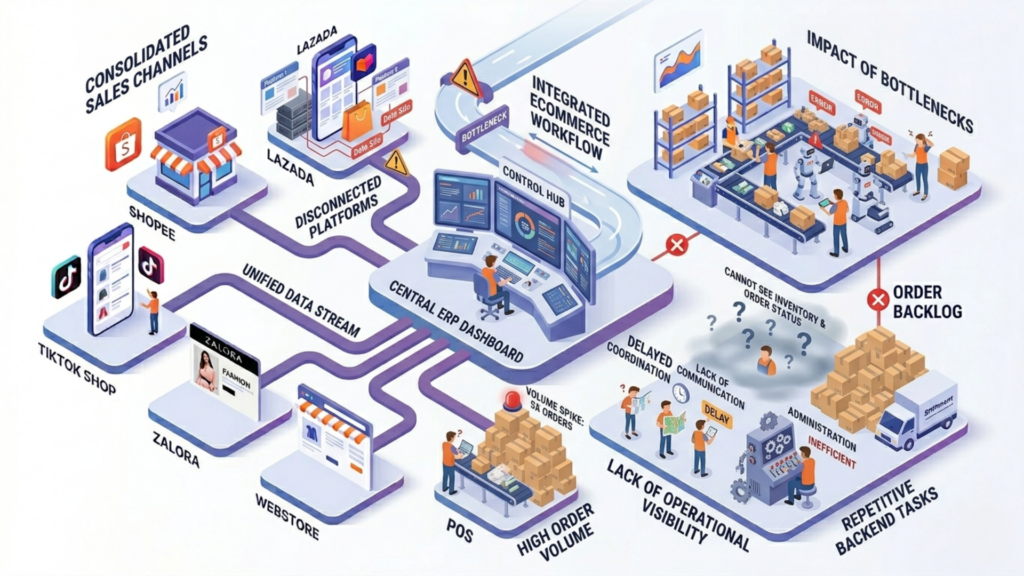
Many ecommerce sellers manage Shopee, Lazada, TikTok Shop, Zalora, webstores, and retail systems independently.
As new orders arrive from different platforms throughout the day, staff often need to switch between multiple dashboards to monitor incoming orders, verify information, and coordinate fulfillment activities.
This fragmented workflow increases operational complexity and makes order management significantly more time-consuming, especially during high-volume sales periods.
2. Manual Order Coordination
Many businesses still rely heavily on manual order processing workflows. Staff may need to perform repetitive tasks such as checking order information, verifying inventory availability, updating order status, generating shipping documents, and coordinating fulfillment activities manually.
These repetitive processes increase operational workload and consume valuable manpower resources that could otherwise be allocated to higher-value business activities.
3. High Order Volume During Campaign
Campaign periods such as Double Digit Sales, Payday Campaigns, and Mega Sales can generate a large volume of orders within a short period of time. As order volume increases rapidly, manual workflows often struggle to keep pace with incoming demand.
Without an efficient order management system, businesses may experience processing delays, fulfillment bottlenecks, and slower shipping preparation during peak sales periods.
4. Lack of Centralized Visibility
Order visibility plays a critical role in maintaining efficient ecommerce operations. Without centralized order management, sellers often find it difficult to monitor order status, fulfillment progress, and operational activities across multiple sales channels.
This lack of visibility can lead to communication gaps, delayed decision-making, and slower order processing workflows.
5. Repetitive Backend Tasks
Many ecommerce businesses spend a significant amount of time performing repetitive backend activities every day.
Tasks such as downloading orders, checking inventory availability, updating fulfillment status, and coordinating shipping activities manually can create unnecessary operational inefficiencies.
As businesses continue growing, these repetitive processes become increasingly difficult to manage without workflow automation.
Effects of Slow Order Processing
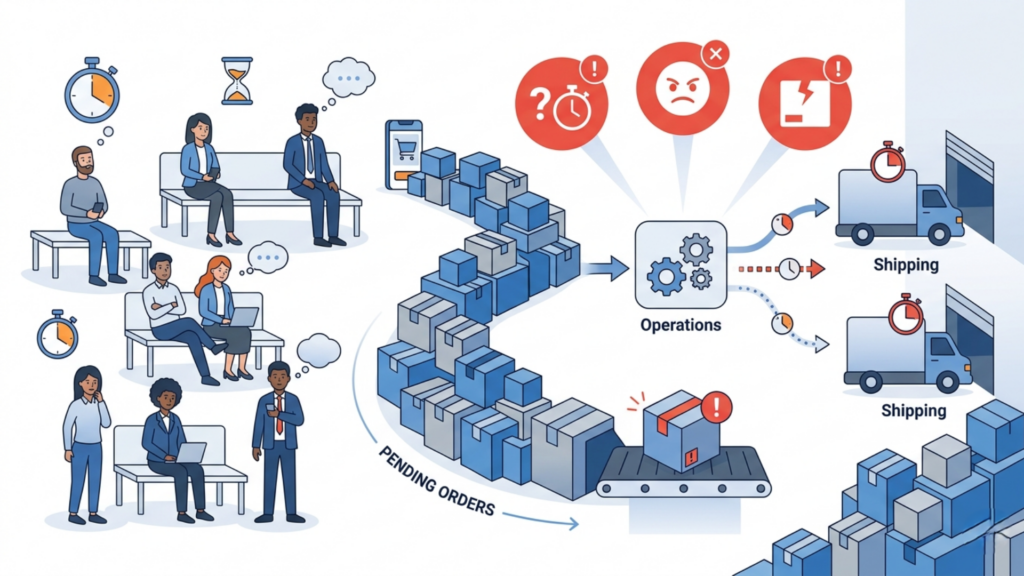
Slow order processing affects more than operational efficiency. It can also impact customer satisfaction, fulfillment performance, and overall business growth. When orders take longer to process, businesses may struggle to maintain a smooth customer experience while managing increasing operational demands.
1. Delayed Fulfillment
Orders take longer to move through fulfillment workflows when processing activities are delayed. This can affect warehouse coordination, picking efficiency, packing preparation, and shipment readiness.
2. Shipping Delays
When order processing slows down, shipment preparation is often delayed as well. Customers may need to wait longer before receiving shipment notifications and tracking information, affecting their overall shopping experience.
3. Increased Operational Costs
Manual workflows often require additional manpower to handle repetitive tasks. As order volume grows, businesses may need to allocate more resources to maintain operational performance, increasing overall operational costs.
4. Higher Risk of Human Errors
The more manual processes involved, the higher the likelihood of mistakes. Order processing errors, fulfillment discrepancies, and incorrect shipment preparation can occur when staff are required to handle large volumes of orders manually.
5. Reduced Customer Satisfaction
Customers expect fast and reliable order fulfillment. When processing delays occur frequently, businesses may find it more difficult to maintain customer satisfaction and deliver a consistent buying experience.
How ERP Helps Improve Order Processing Efficiency?
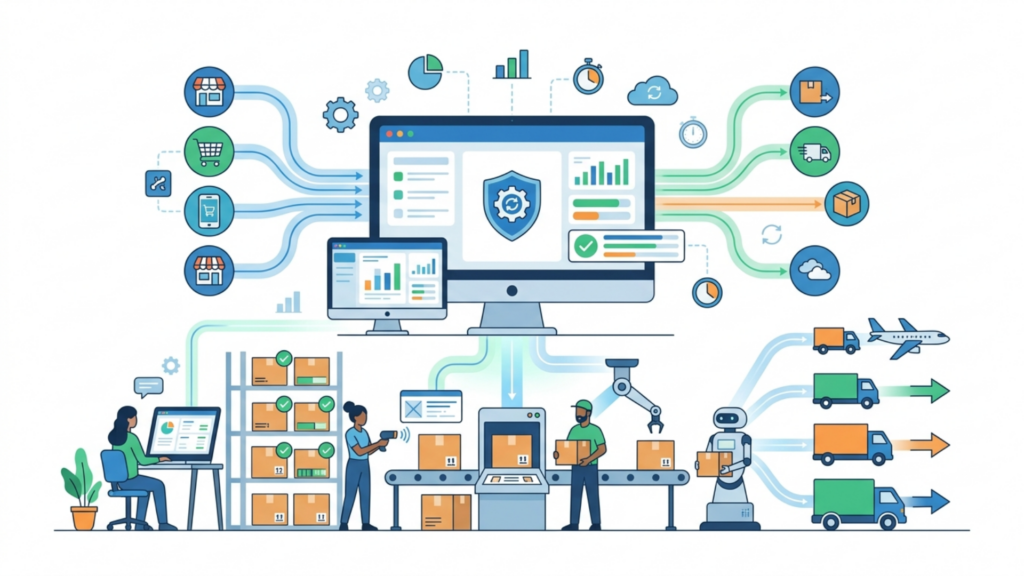
An ecommerce ERP system helps businesses centralize order management across multiple sales channels through one connected backend system. Instead of processing orders separately across different marketplaces and platforms, sellers can manage ecommerce operations more efficiently through a centralized workflow.
By reducing dependency on manual processes, ERP systems help businesses streamline operational activities while improving coordination between inventory management, order processing, fulfillment, and shipping workflows.
ERP systems help improve:
- Order visibility
- Workflow efficiency
- Order synchronization
- Fulfillment coordination
- Operational productivity
As businesses continue scaling across multiple marketplaces, centralized order management becomes increasingly important for maintaining operational efficiency and supporting long-term growth.
Key Ways ERP Helps Reduce Order Processing Time
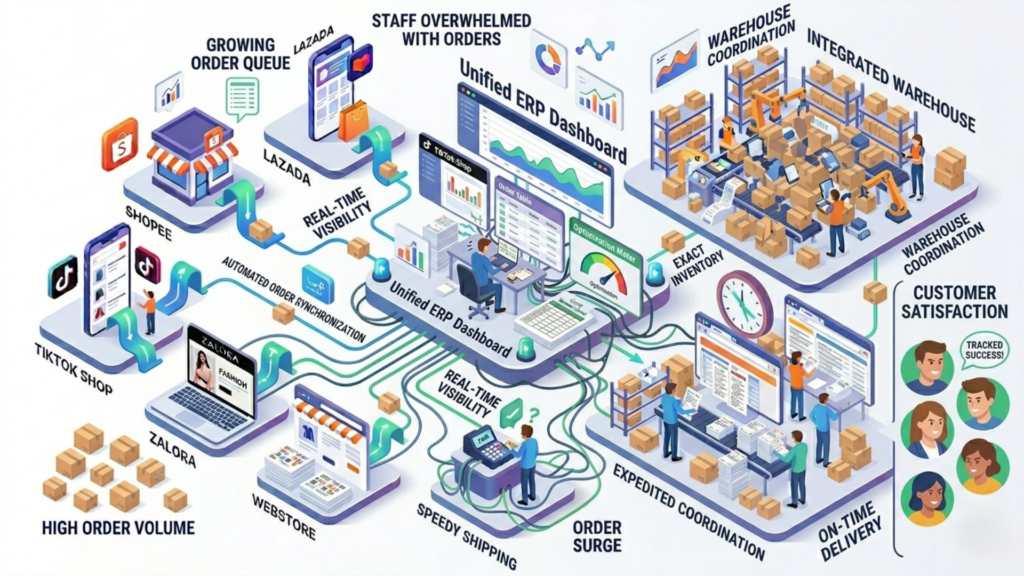
1. Centralized Order Management
Orders from multiple sales channels can be managed through one centralized system instead of switching between separate platforms throughout the day.
By connecting ecommerce marketplaces, webstores, POS systems, courier services, and other business tools into one integrated ecosystem, sellers can improve order visibility, streamline operational workflows, and coordinate fulfillment activities more efficiently.
This helps reduce manual processing workload while supporting faster and more scalable order management.
2. Automatic Order Synchronization
Orders can be synchronized automatically across connected sales channels, reducing the need for manual order monitoring and repetitive data checking.
As new orders are received from different marketplaces, businesses can manage order information more efficiently through one connected system.
This helps reduce processing delays while improving order visibility across multiple sales channels.
3. Faster Order Coordination
Centralized visibility helps teams coordinate fulfillment activities more efficiently. Instead of manually tracking order status across different platforms, staff can monitor order progress through one system. This improves communication between operational teams and helps accelerate the overall order fulfillment process.
4. Better Multichannel Operations Management
Businesses can manage ecommerce operations through one system instead of multiple disconnected tools. As businesses expand across Shopee, Lazada, TikTok Shop, webstores, retail stores, and other sales channels, operational coordination becomes increasingly complex. A centralized ERP system helps simplify multichannel management while improving operational consistency across the business.
5. Reduced Manual Workload
Automation reduces repetitive backend tasks and improves operational efficiency. By reducing dependency on manual order processing activities, businesses can lower operational workload and minimize human errors.
This allows teams to focus more on business growth, customer service, and operational improvement initiatives.
6. Inventory & Order Visibility
Monitor inventory and order status through a centralized backend system instead of checking multiple platforms separately.
Improved visibility allows sellers to track inventory availability, incoming orders, and fulfillment progress more efficiently from one place.
This helps support better operational decision-making while reducing delays caused by fragmented information across different sales channels.
Why Growing Ecommerce Sellers Need ERP?
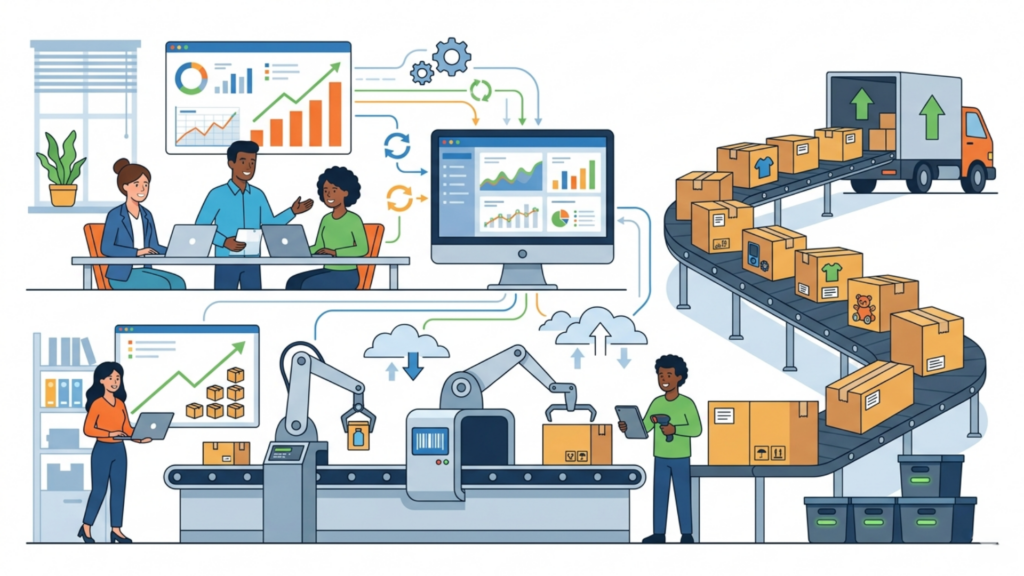
As ecommerce businesses continue growing, operational complexity increases alongside order volume. Manual workflows that once worked during the early stages of business often become difficult to sustain as more orders, products, marketplaces, and fulfillment activities need to be managed simultaneously.
Growing ecommerce businesses typically require:
- Faster order processing
- Better operational visibility
- Standardized workflows
- Reduced manpower dependency
- Improved business scalability
An ecommerce ERP system helps businesses support these operational requirements more efficiently by centralizing workflows, improving coordination, and reducing reliance on manual processes. By establishing a more structured and scalable operational foundation, sellers can manage increasing order volumes while maintaining fulfillment efficiency and customer satisfaction.
How SiteGiant ERP Helps Streamline Order Processing?
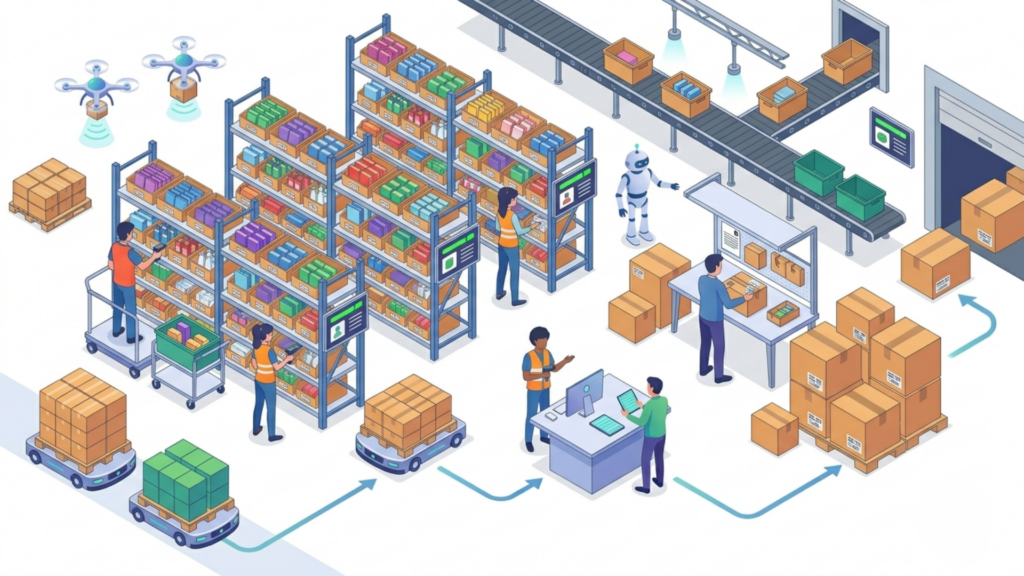
SiteGiant ERP is designed specifically for Malaysian ecommerce sellers managing multichannel operations across multiple marketplaces and sales channels.
Instead of processing orders separately across different platforms, SiteGiant ERP helps synchronize multichannel orders into one centralized system, allowing sellers to manage and process orders from multiple sales channels in one place.
With all orders consolidated into a single backend, operational teams can reduce manual coordination and improve order processing efficiency. Warehouse staff can print picking lists complete with rack numbers, product images, and required quantities, helping speed up the order picking process and improve picking accuracy.
Before packing begins, orders can be cross-checked to help reduce fulfillment mistakes and ensure the correct products are prepared for shipment. Sellers can also filter unprinted or unscanned shipping labels, making it easier to identify pending marketplace orders and reduce the risk of missing unfulfilled orders.
To further improve operational control, SiteGiant ERP allows businesses to record packing processes and time logs, providing additional documentation that can be used as supporting evidence when handling delivery disputes through SiteGiant ParcelGuard.
As ecommerce businesses continue expanding across Shopee, Lazada, TikTok Shop, Zalora, webstores, and retail channels, centralized order management and streamlined fulfillment workflows become increasingly important for maintaining operational efficiency and supporting business scalability.
Frequently Asked Questions (FAQ)
What is order processing in ecommerce?
Order processing refers to the workflow involved in managing orders from purchase confirmation to shipment preparation.
How can ERP improve order processing?
ERP centralizes order management and helps automate operational workflows.
Why does order processing become slower as businesses grow?
Higher order volume creates additional operational complexity and coordination requirements.
Can ERP reduce manual workload?
Yes. ERP helps automate repetitive workflows and reduce dependency on manual processes.
Is ERP suitable for growing ecommerce businesses?
Yes. ERP helps businesses scale operations more efficiently as order volume increases.
Why do multichannel sellers need centralized order management?
Managing multiple sales channels separately often creates operational inefficiencies and processing delays.
Conclusion
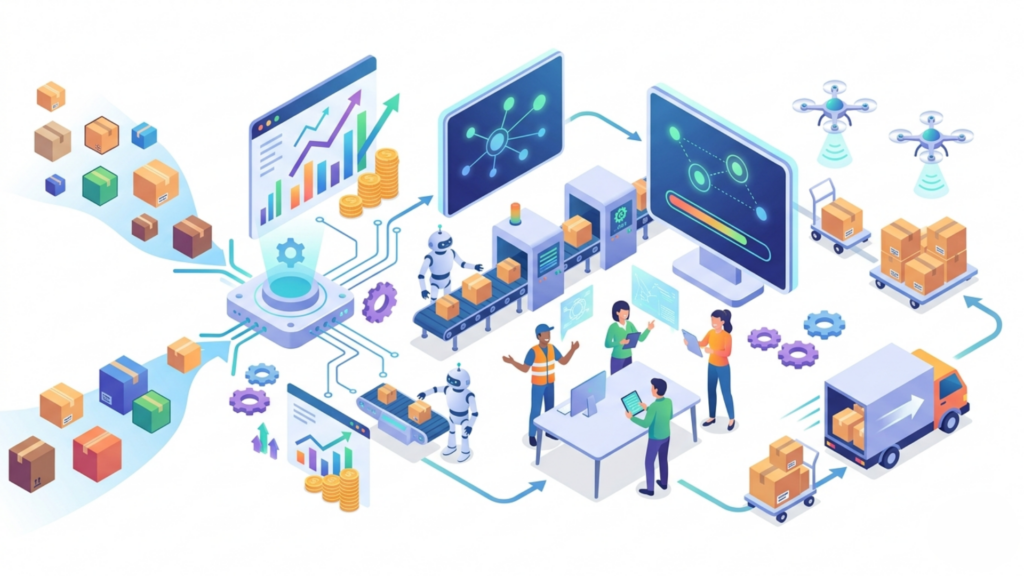
As ecommerce businesses continue expanding across multiple sales channels, manual order processing becomes increasingly difficult to manage efficiently.
Without centralized order management, sellers often face processing delays, fulfillment bottlenecks, repetitive manual work, inventory coordination challenges, and operational inefficiencies that can affect both customer experience and business performance.
That is why more Malaysian ecommerce sellers are adopting ecommerce ERP systems to streamline order processing, improve workflow efficiency, and centralize multichannel operations.
As customer expectations continue to rise, businesses can no longer afford slow, manual, and disconnected order processing workflows. A modern ERP system helps centralize operations, automate repetitive tasks, improve inventory accuracy, and streamline the fulfillment process from order capture to shipment.
With multichannel order management, real-time inventory synchronization, warehouse management capabilities, and fulfillment automation tools, SiteGiant ERP helps businesses process orders more efficiently while supporting long-term operational growth and scalability.
If your team is still spending hours managing orders, updating inventory, and coordinating shipments manually, it may be time to explore how SiteGiant ERP can help improve operational efficiency and support future business growth.