The popularity of online shopping and rising internet penetration are driving Malaysia’s e-commerce sector’s rapid growth. Leveraging multichannel selling has emerged as a crucial success technique for eCommerce retailers. Businesses can increase sales and client reach by extending their presence on sites like Shopee, Lazada, TikTok Shop, and even social media markets. However, to avoid issues like inconsistent customer experiences and inventory mismanagement, successful multichannel selling necessitates the appropriate tactics, resources, and procedures.
- What is Multichannel Selling?
- Why Multichannel Selling is Crucial in Malaysia
- Challenges of Multichannel Selling
- Strategies for Successful Multichannel Selling
- Benefits of Multichannel Selling
- Case Study: A Malaysian Seller’s Journey to Multichannel Success
1. What is Multichannel Selling?
Listing and selling things on several sales channels at the same time is known as multichannel selling. These channels may consist of:
- Online Marketplaces: Lazada, Shopee, TikTok Shop.
- Social Media Platforms: Facebook, Instagram, and TikTok.
- Webstores: Independent websites powered by platforms like SiteGiant or Shopify.
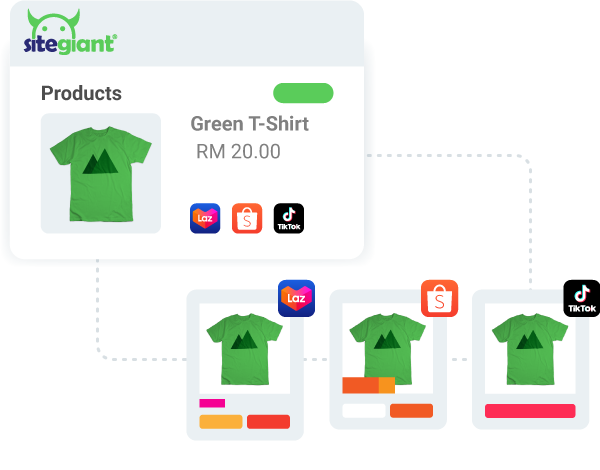
By adopting a multichannel strategy, merchants can cater to a broader audience, diversify their revenue streams, and reduce reliance on a single platform.
2. Why Multichannel Selling is Crucial in Malaysia
- Diverse Consumer Preferences: Malaysian shoppers use a variety of channels to find the best offers and convenience.
- Growing Digital Ecosystem: Platforms such as Shopee and TikTok Shop are constantly improving their capabilities, which makes it simpler for retailers to connect with consumers.
- Increased Competition: By preserving exposure across channels, selling on several platforms aids retailers in remaining competitive.
3. Challenges of Multichannel Selling
While the benefits are significant, multichannel selling comes with challenges:
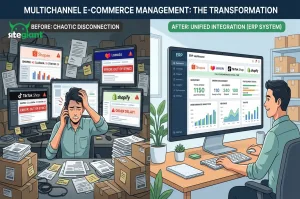
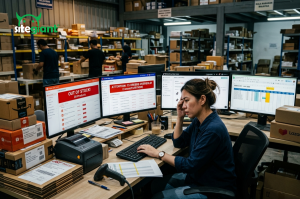
- Inventory Management: It can be quite difficult to maintain accurate and consistent inventory data across channels.
- Order Fulfillment: Handling orders from several platforms could result in mistakes or delays.
- Platform-Specific Requirements: Every marketplace has different cost schedules, listing forms, and marketing resources.
4. Strategies for Successful Multichannel Selling
1. Centralize Operations with an ERP System
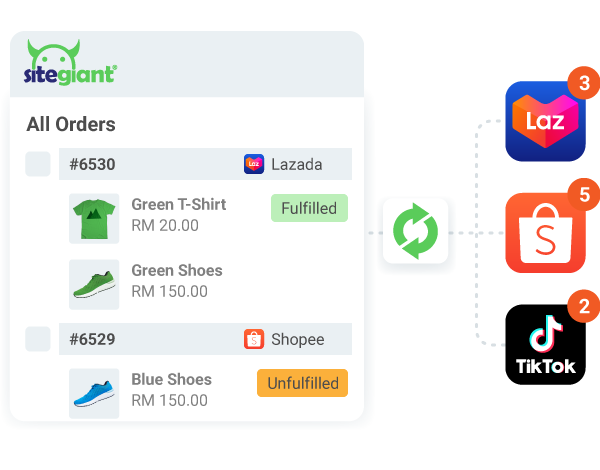
Multichannel success requires the implementation of an ERP system. These systems save time and minimize errors by synchronizing payment, inventory, and order data across platforms.
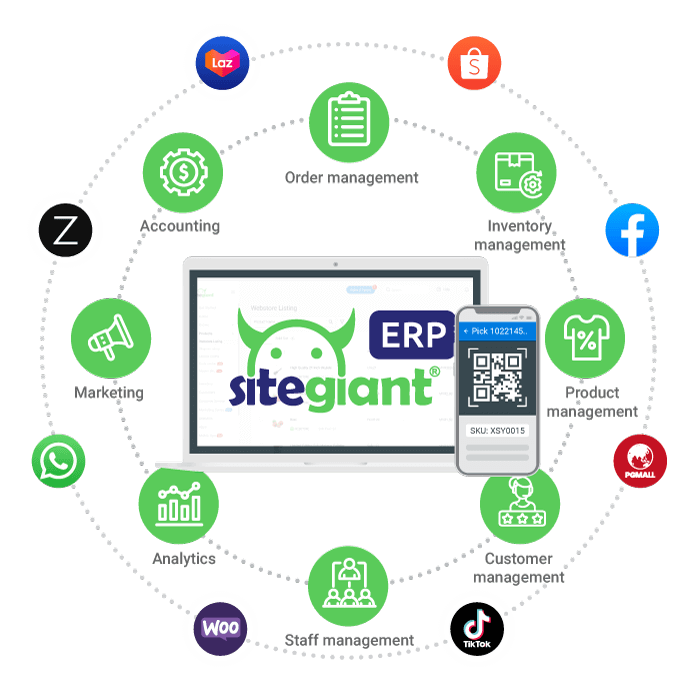
Example: With SiteGiant’s ERP system, merchants can manage operations from a single dashboard thanks to its smooth interface with Lazada, Shopee, and TikTok Shop.
2. Optimize Product Listings for Each Channel
Every platform has different audiences and needs. Adapt product descriptions, names, and photos to the tastes of users on each platform.
Pro Tip: To draw in Malaysian customers, use specific keywords such as “cheap online shopping Malaysia” or “TikTok trending items.”
3. Automate Inventory and Order Management
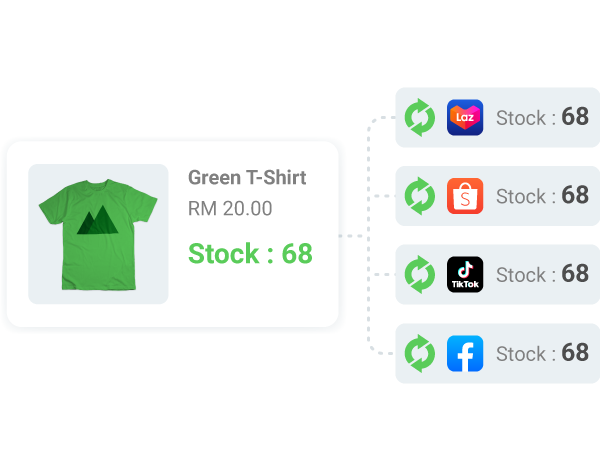
Real-time stock level tracking and cross-channel synchronization are made possible by automation tools. Conflicting orders, stockouts, and overstocking are avoided as a result.
For Example, An automated system makes sure that inventory updates on Lazada and TikTok Shop occur at the same time that a product sells on Shopee.
4. Utilize Platform-Specific Features
Take advantage of each platform’s tools for promotion and engagement. For example:
- Run flash sales on Shopee.
- Use TikTok Shop’s live selling feature to interact with customers in real-time.
- Offer free shipping promotions on Lazada to attract buyers.
5. Track Performance with Reporting Tools
Keep a close eye on marketing and sales results across all platforms. Top-performing goods, sales trends, and areas for improvement can all be found with the aid of reporting tools that are integrated with ERP systems.
5. Benefits of Multichannel Selling
- Expanded Customer Reach: Meet clients where they most often shop.
- Improved Revenue Potential: More sales opportunities result from diversified outlets.
- Reduced Risk: If regulations or market conditions change, relying solely on one platform may be dangerous.
6. Case Study: A Malaysian Seller’s Journey to Multichannel Success
Take the example of a nearby fashion business that once sold just on Shopee. Using SiteGiant’s ERP system, they adopted a multichannel strategy before branching out to TikTok Shop and Lazada. In six months:
- Sales increased by 40%.
- Inventory discrepancies were reduced by 90%.
- Customer complaints about delivery delays dropped by 25%.
For Malaysian eCommerce businesses looking to expand and remain sustainable, multichannel selling is now a must. Merchants may successfully negotiate the challenges of multichannel operations with the correct tools, such as ERP systems, and tactics, including automated inventory management and optimized listings. Sellers can boost sales and create a robust, scalable eCommerce business by adopting this strategy.
Boost Your E-Commerce Growth with SiteGiant ERP
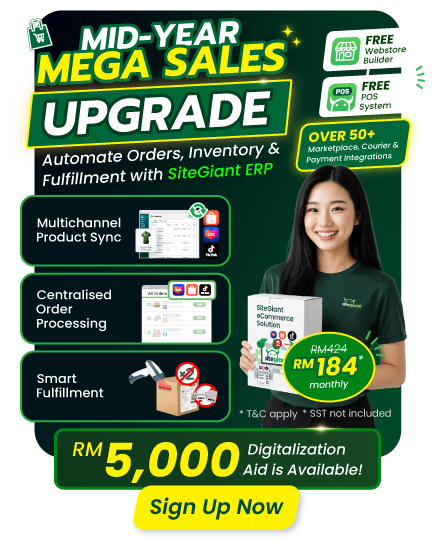
To successfully manage your multichannel strategy, an integrated solution like SiteGiant ERP is essential. It helps streamline your operations, centralize your inventory, and automate orders, allowing you to focus on growing your business across multiple platforms without the hassle.
Grow your business with SiteGiant ERP today!