
Sellers in Malaysia’s fast-growing eCommerce market often operate across multiple platforms like Shopee, Lazada, TikTok Shop, and their websites. While this approach increases sales, it also creates challenges that ERP systems can help solve:
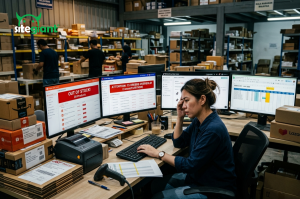
- Inconsistent inventory tracking: Stock levels may not match across platforms, leading to overselling or stockouts.
- Complicated order management: Orders from different marketplaces need to be tracked and fulfilled separately.
- Inefficient payment reconciliation: Each platform has its own commission structure and payment schedule.
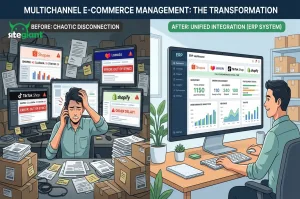
ERP systems help merchants streamline multichannel selling by consolidating order, payment, and inventory data into a single, automated platform.
- Benefits of ERP Integration for Multichannel Merchants
- Tools and Platforms that Facilitate Seamless Integration
- Examples of How ERP Simplifies Operations Across Lazada, Shopee, and TikTok Shop
- Conclusion: The Future of Multichannel Selling with ERP
1. Benefits of ERP Integration for Multichannel Merchants
Centralized Inventory Management

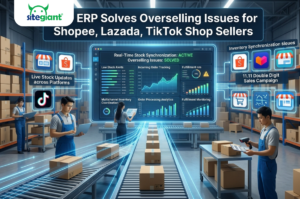
- Syncs inventory in real-time across Shopee, Lazada, and TikTok Shop.
- Prevents overselling and stock discrepancies.
- Automates stock replenishment alerts to avoid running out of popular items.
- Example: A fashion retailer reduced overselling by 90% after implementing an ERP system to update inventory across marketplaces automatically.
Automated Order Processing Across Multiple Platforms
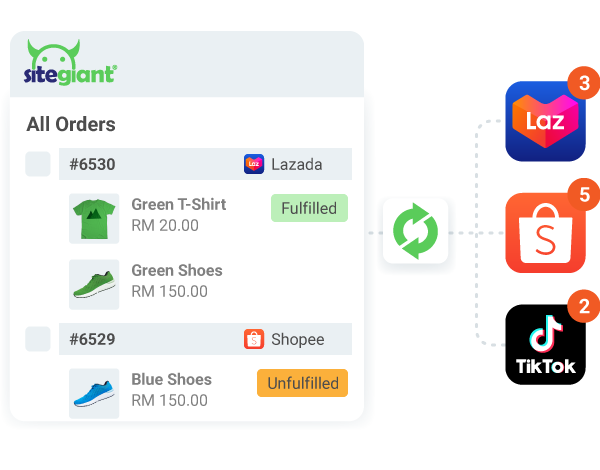
- Consolidates orders from all sales channels into a single dashboard.
- Enables batch order processing, reducing manual work.
- Auto-assigns shipping couriers based on platform preferences.
- Example: A Malaysian electronics seller automated order processing across Shopee and Lazada, cutting fulfillment time by 70%.
Simplified Payment Reconciliation
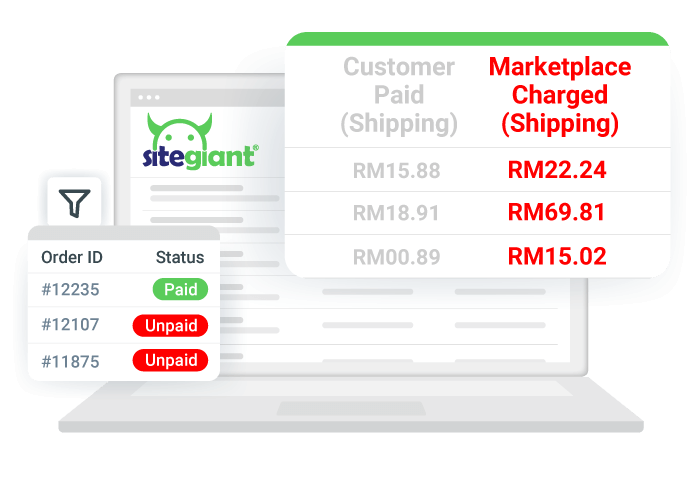
- Automatically matches sales records with received payments from different marketplaces.
- Tracks platform commissions, refunds, and processing fees to ensure accurate financial reporting.
- Reduces manual reconciliation errors and saves time.
- Example: A home essentials store integrated ERP reconciliation, which helped it recover RM5,000 in miscalculated fees over three months.
2. Tools and Platforms that Facilitate Seamless Integration
Businesses need the right ERP and integration tools to achieve seamless multichannel selling.
Recommended ERP Systems for Malaysian Sellers
- SiteGiant ERP – Built for Shopee, Lazada, and TikTok Shop sellers in Malaysia.
- SAP Business One – This is Suitable for large-scale enterprises.
- Oracle NetSuite – Best for businesses with global operations.
How ERP Integration Works:
- Step 1: Connect all sales channels (Shopee, Lazada, TikTok Shop, WooCommerce).
- Step 2: ERP automatically syncs inventory, orders, and payments in real time.
- Step 3: Generate consolidated reports to track sales, stock levels, and revenue.
Examples of How ERP Simplifies Operations Across Lazada, Shopee, and TikTok Shop
Case Study: A Shopee & Lazada Seller Scaling to 1,500+ Orders Daily
Problem: A Malaysian gadget seller faced inventory mismatches and slow fulfillment due to manual stock updates.
Solution: Implemented an ERP system to sync stock levels in real time and automate order processing.
Result:
- Eliminated stock discrepancies between Shopee and Lazada.
- Cut order processing time from 48 hours to 12 hours.
- Increased daily order volume from 500 to 1,500+ without hiring extra staff.
4. Conclusion: The Future of Multichannel Selling with ERP
With e-commerce competition rising in Malaysia, sellers need ERP integration to manage inventory, orders, and payments efficiently across Shopee, Lazada, and TikTok Shop. Moreover, by automating workflows, businesses can reduce errors, save time, and scale faster.
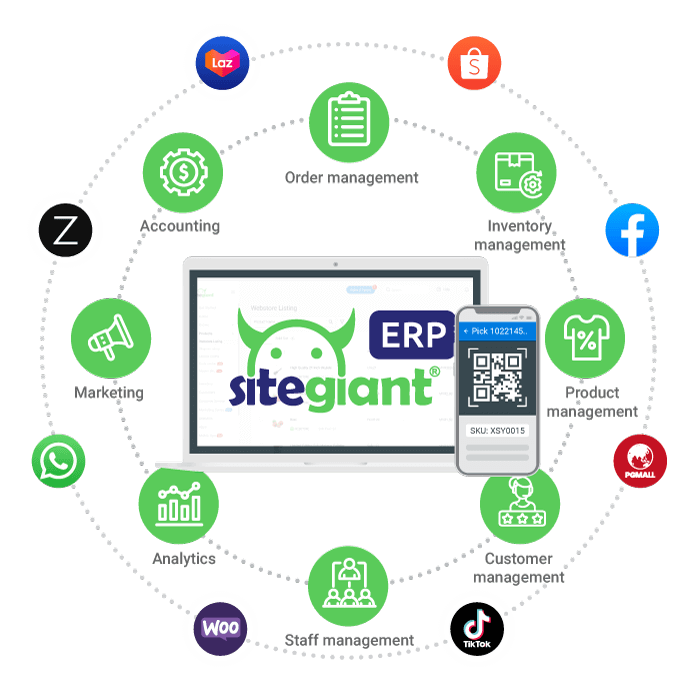
Try SiteGiant’s ERP for seamless integration and automation!